But once they get established, you start noticing the not so cute stuff. Dead fronds hanging down like a messy haircut. Seeds dropping all over the driveway. Maybe a heavy frond comes down after a windy night and you suddenly think, ok, I should probably take this seriously.
That’s where palm tree pruning comes in. Not as a random weekend job with a ladder and “she’ll be right” energy. More like a simple, regular bit of home maintenance that keeps the tree healthy, your property safer, and your yard looking like you actually stay on top of things. Professional services such as https://arborpride.com.au/residential-services/tree-pruning/ can also help ensure palms are pruned correctly without damaging the tree or creating unnecessary safety risks.
This guide is for Sydney homeowners who want the real answer. When to prune, how often to book it, what’s safe to remove, what you should never touch, and when it’s time to call a pro.
Why palm pruning is different from normal tree pruning
If you’ve pruned a lemon tree or a hedge, you might assume palms work the same way. They don’t.
A palm doesn’t branch out and recover the way many other trees do. It grows from a single growing point at the top, basically the crown. Damage that crown and you can permanently weaken the palm or kill it. And yeah, it’s surprisingly easy to do that if someone over trims, or trims the wrong fronds.
Also, palms store nutrients in older fronds. Those slightly yellowish fronds you want to remove for looks might be feeding the tree. So aggressive trimming can backfire. A “clean” palm can actually be a stressed palm.
So proper palm tree pruning is mostly about removing what’s genuinely dead, unsafe, or causing a problem. Not giving it a buzz cut because you saw a resort do it.
The Sydney factor: weather, storms, and growth spurts
Sydney palms live in a pretty active climate. Warm spells, sudden downpours, humid weeks, coastal winds, and the occasional wild storm front that makes you stare out the window and regret not clearing the yard.
All of that affects frond drop and timing.
Here’s what matters most for homeowners:
- Windy periods tend to loosen older fronds. That’s when they fall.
- Humidity and rain can speed up growth, which means more fronds, more mess.
- Storm season is when neglected palms become more risky. Heavy fronds plus high winds is not a great combo.
So while there are general rules, Sydney schedules for palm tree pruning are often based on what your specific palms are doing, and where they’re planted. Click here to learn more about
When should you prune palms in Sydney?
A good rule. Prune when the palm is actually asking for it.
That usually looks like:
- Dead, brown fronds that are clearly no longer functional
- Fronds hanging low enough to block walkways, driveways, windows, gutters
- Heavy seed pods or fruit dropping constantly (mess, slip hazards, rats, cockatoos… pick your problem)
- Fronds that look cracked, broken, or partly detached after wind
- Visible buildup of dead material around the crown (especially in some species)
In terms of season, Sydney homeowners usually book in:
Late spring to early autumn
This is the most common window because palms are actively growing, and it’s easier to see what is dead vs what is just a bit tired looking. Also the weather is more predictable, so it’s safer and faster to get the job done.
After major storms
If a storm has ripped or loosened fronds, it’s smart to do a quick inspection. If anything is hanging awkwardly, don’t wait. That’s a falling hazard.
Avoid going too hard in winter
You can still prune in winter if needed, especially for safety. But heavy aesthetic trimming in winter is not ideal. Growth slows, recovery slows, and some palms just look worse for longer.
The short version. Schedule palm tree pruning when fronds are dead or dangerous, not when you feel like “tidying it up a bit.”
How often should Sydney homeowners book palm pruning?
This is the part everyone wants, the frequency. And it depends on species, size, location, and how tidy you want your place to look.
But here are realistic Sydney ranges.
Most common: every 6 to 12 months
For a typical suburban property with a few established palms, booking once or twice a year is the sweet spot.
- Every 6 months if your palms drop a lot of fronds or seed pods, or if they’re near paths, pools, driveways, or gutters.
- Every 12 months if the palms are slower growers, or they’re positioned where mess and risk are lower.
Many homeowners do one main prune around late spring or early summer, then a lighter clean up later if needed.
Low maintenance palms: every 12 to 18 months
Some palms just don’t create constant chaos. You might get away with a yearly prune, sometimes longer. Still, don’t let it go for years, because old fronds can stack up and get heavier.
High drop or high risk areas: every 3 to 6 months
If your palm is right over a driveway, near the front entrance, beside a pool, or close to power lines, you’re not just pruning for looks. You’re pruning for safety. In those cases, booking more often can make sense.
And if you rent your place out, or it’s a strata situation, more frequent palm tree pruning can prevent complaints, hazards, and rushed emergency call outs later.
Signs you waited too long
Most people don’t schedule pruning until something annoying happens. Fair. But there are a few signs the palm has crossed into “ok this is overdue” territory.
- A skirt of dead fronds has built up and is getting thick
- Fronds are dropping in large pieces, not small bits
- Seed pods are dropping daily and staining paving
- You can hear fronds scraping the roof or gutters in wind
- Birds, rats, or insects are living in the old frond skirt
- You feel nervous walking under it, which is honestly a good instinct
If you’re there, book the palm tree pruning rather than trying to wrestle it yourself.
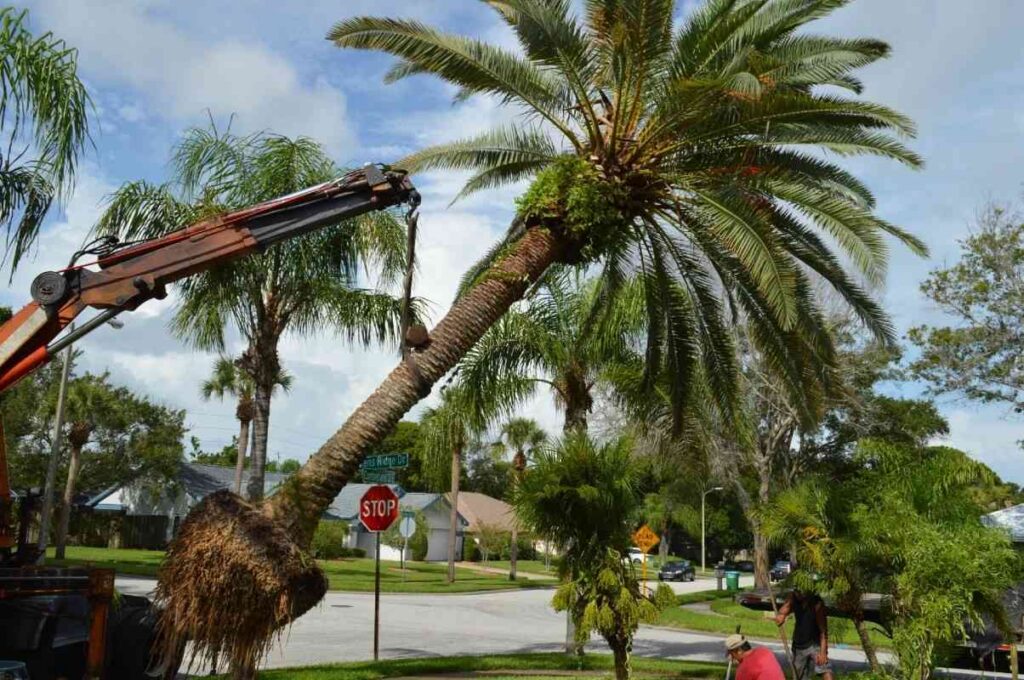
What should be removed during palm pruning?
Let’s keep it simple. A proper prune generally includes:
- Dead, fully brown fronds (these are safe to remove and reduce risk)
- Broken or damaged fronds
- Old flower stalks and fruit bunches if they’re dropping mess
- Loose dead material near the crown, carefully, without gouging the trunk
It does not mean stripping everything green.
A common industry guideline is not to remove fronds above the horizontal line. Picture the palm crown like a clock face. If you’re cutting fronds that point up, you’re going too far. Over pruning makes palms weaker and more vulnerable to pests and nutrient issues.
Good palm tree pruning keeps enough healthy fronds for photosynthesis and stability. Check out more about maintenance and risk management of large trees and palms.
The “pineapple palm” look and why it’s a problem
You’ve seen it. A palm shaved way back so it’s basically a pole with a puff on top. It looks neat for about five minutes, and then it starts looking… stressed. Because it is.
Over pruning can lead to:
- nutrient deficiencies (since you removed the nutrient storage fronds)
- slower growth
- thinner trunk development over time
- greater wind vulnerability (ironically)
- increased chance of crown issues
So if you’re hiring someone, be clear you want health first, not the super trimmed resort look. If they suggest removing most green fronds “for cleanliness,” that’s a bit of a red flag.
DIY vs hiring a professional in Sydney
This is where I’m going to be blunt.
Small palms you can reach safely from the ground. Fine. Use clean tools, cut only dead fronds, wear gloves, and watch for spikes. Some palms have nasty ones.
But taller palms. Or palms over roofs, fences, driveways, pools, or near lines. That’s where DIY turns into a bad idea quickly.
Reasons homeowners book pros for palm tree pruning in Sydney:
- height and access (ladders + awkward angles = accidents)
- heavy fronds can weigh a lot more than you expect
- seed pods can be messy and slippery underfoot
- disposal is annoying, and council green bins fill fast
- some palms have sharp thorns and fibrous bases that cut skin easily
- if you cut wrong near the crown, you can cause long term damage
A proper crew will have climbing gear, elevated work platforms if needed, and they know what not to cut. That’s the real value.
How long does palm pruning take?
For a typical suburban job, a few palms, accessible yard, no surprises.
- small to medium palms: 15 to 45 minutes each
- taller palms needing climbing or special access: 45 to 90 minutes each
- large clean ups (multiple palms plus removal and disposal): 2 to 4 hours total
Time varies mostly based on access and cleanup. Cleanup is half the work sometimes.
If your palms haven’t been touched in years, expect longer. A big skirt of dead fronds takes time to drop safely and haul away.
What does it cost in Sydney?
Costs vary a lot by height, access, number of palms, and disposal. But to give you a rough idea, Sydney pricing often reflects:
- palm height and difficulty
- whether the fronds can be dropped safely or need lowering
- proximity to structures and hazards
- whether green waste removal is included
- travel and minimum call out fees
If you’re booking regular palm tree pruning, some providers offer better rates for scheduled maintenance, because it’s quicker each time and more predictable.
A simple booking schedule that works for most homes
If you want a practical approach and you don’t want to think about it too much, try this:
Option A: One main prune per year
Book in late spring or early summer. Remove dead fronds and any heavy fruiting stalks. This keeps things tidy before the peak growth period.
Option B: Two smaller prunes per year
Book once in spring, once in late summer. This works well for palms that drop a lot or sit near high traffic areas.
Option C: As needed, but with a hard limit
If you prefer reactive maintenance, still set a reminder to inspect every 6 months. If you wait until a frond falls, you’re already late.
Consistency is what makes palm tree pruning cheaper and safer over time. It’s the big neglected jobs that become expensive.
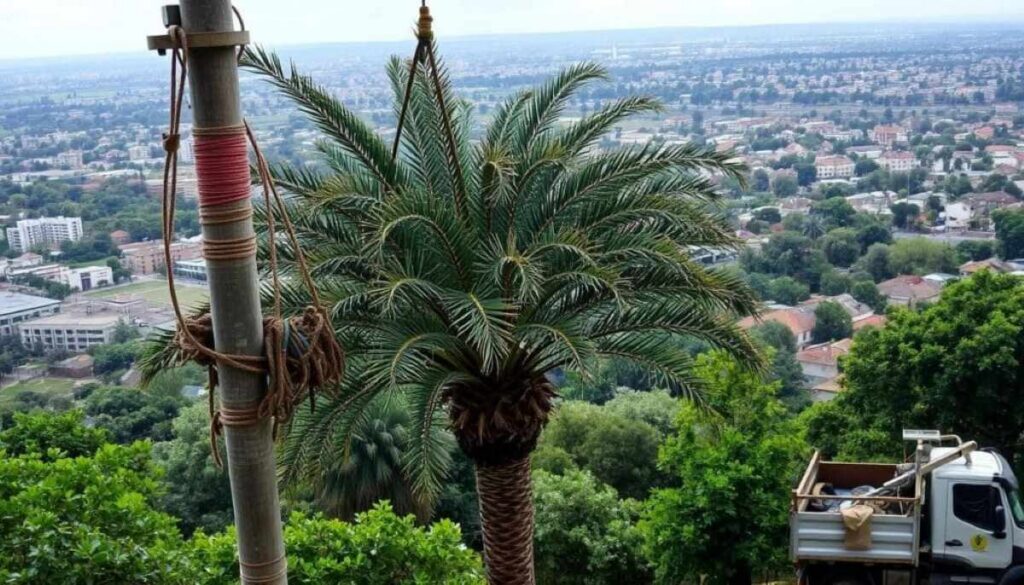
Common mistakes homeowners make (and regret later)
A few patterns show up again and again in Sydney yards.
- Cutting green fronds for appearance, then wondering why the palm looks thin and sad.
- Leaving seed pods because they “don’t look that bad,” then dealing with constant mess or pests.
- Using blunt or dirty tools, which can tear tissue and invite disease.
- Removing fronds too close to the trunk, damaging the palm’s protective layer.
- Ignoring palms near gutters, then dealing with blocked drainage and overflow during storms.
- Underestimating weight, because a dead frond can come down hard.
If you do nothing else, remember this. Safety and plant health first. A palm isn’t a hedge.