Funeral flowers meaning changes from community to community because flowers are never just decoration. They are symbols shaped by faith, migration, climate, and what each culture believes happens after death, including here in Australia’s diverse cities and regional towns.
In Australian funerals, families often blend traditions. A single service in Sydney, Melbourne, Brisbane, Perth, Adelaide, Canberra, Hobart, Darwin, or regional centres can include European, Asian, Middle Eastern, Pacific, and First Nations influences, each bringing distinct funeral flowers meaning.
Why does funeral flowers meaning shift between cultures?
Funeral flowers meaning shifts because cultures attach different stories to colour, scent, and plant type. What signifies purity to one group may signal mourning or even celebration to another.
In Australia, florists commonly ask about religion, language background, and preferred customs before recommending blooms. That consultation matters because the “right” arrangement in one tradition can feel out of place in another, even with good intentions.
How do religion and spirituality shape funeral flowers meaning in Australia?
Religion strongly shapes funeral flowers meaning because flowers can represent the soul, prayer, or the hope of reunion. In many Christian services across Australia, white lilies and soft whites are linked with peace and resurrection themes.
In Buddhist and some Hindu communities, flowers may emphasise impermanence and respect, with offerings that feel more devotional than decorative. Australian celebrants and clergy often guide families on what is appropriate for the service setting.
Why do colours send different messages at funerals?
Colours change meaning depending on cultural associations and historical practice. Funeral flowers meaning can swing widely when a colour is tied to either grief or honour in a specific tradition.
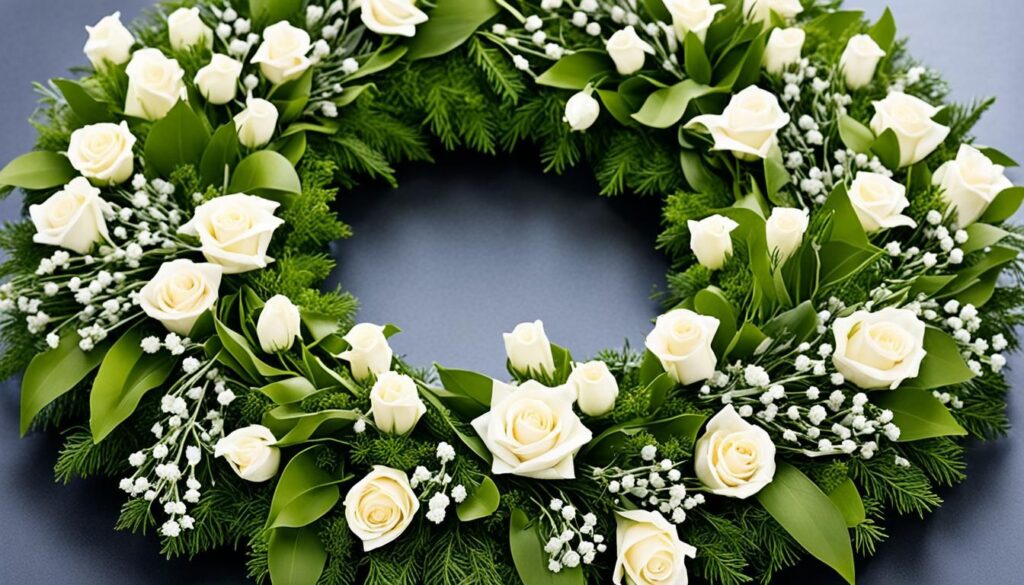
In many Australian Western funerals, white suggests purity and sympathy, while red can feel too intense for some families. In other communities, red may express love, strength, and respect, so florists in multicultural suburbs often clarify colour preferences early.
Which flowers carry the most cross-cultural misunderstandings?
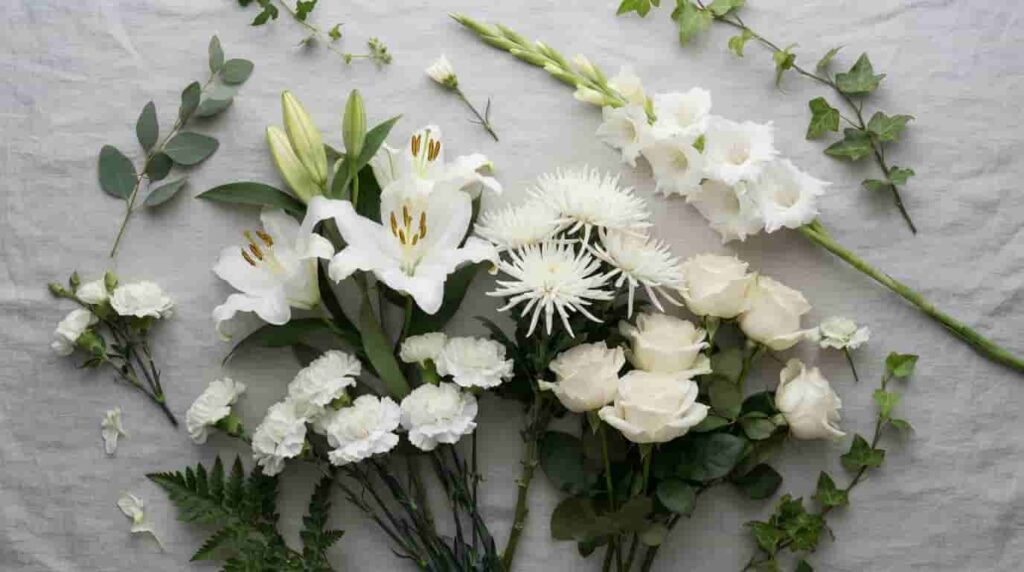
Lilies, chrysanthemums, and roses can cause confusion because they are common and symbolic, but not universally. Funeral flowers meaning for chrysanthemums is a well-known example: in some European-influenced traditions they are strongly tied to death and remembrance, while others view them as cheerful and long-lasting.
Roses can also vary. Red roses might feel romantic to some, yet to others they simply express deep respect. In Australia, mixed arrangements are often chosen to avoid placing one strong symbol at the centre.
How do migration and family heritage influence choices in Australian funerals?
Migration reshapes funeral choices because families carry traditions from overseas while adapting to Australian norms and availability. Funeral flowers meaning becomes layered when a family wants to honour grandparents’ customs and also reflect the life lived in Australia.
In practice, this might look like combining a classic wreath with a culturally specific offering, or choosing flowers that match a heritage palette while using local Australian seasonal blooms.
What role does Australia’s climate and seasonality play in funeral flowers meaning?
Seasonality affects what is available, affordable, and visually expected. That can influence funeral flowers meaning because the “traditional” flower may be out of season or costly, leading families to select substitutes that still feel respectful.
In Australia, winter services might rely more on roses, chrysanthemums, orchids, or natives sourced through supply chains, while spring and summer can open up broader options. Many florists use colour, fragrance, and form to recreate the intended symbolism when the exact bloom is not practical.
How do Australian native flowers change the message of sympathy?
Native flowers often signal “place” and identity. For many families, funeral flowers meaning becomes personal when the arrangement includes banksias, waratahs, kangaroo paw, gum foliage, or other natives that reflect a loved one’s connection to bushland, the coast, or a particular state.
In regional areas, natives can feel grounded and familiar. In metro areas, natives are sometimes chosen to reflect an Australian life story, even when the family’s heritage is elsewhere.
How do First Nations perspectives affect funeral flowers meaning in Australia?
First Nations communities are not one single culture, so practices differ widely by Country and family. Funeral flowers meaning may be less central than other forms of honour, such as smoking ceremonies, artwork, song, or community gathering, depending on local custom.
Where flowers are used, they may be chosen for connection to Country, local plants, or meaningful colours rather than standard catalogue symbolism. It is common in Australia for organisers to check with family Elders or cultural liaison support before making assumptions.
Why do some cultures prefer donations or simple tributes instead of large floral displays?
Some families choose minimal flowers because their tradition emphasises humility, practicality, or charity. In those cases, funeral flowers meaning can be expressed through a single spray, a small tribute at the coffin, or a condolence bouquet sent to the home rather than the service.
In Australia, many notices include “in lieu of flowers” with a nominated charity. For these families, the meaning is still present, but it is redirected into community support, medical research, or a cause connected to the person who died.
How does the type of service in Australia influence funeral flower choices?
A church funeral, chapel service, graveside committal, and crematorium farewell each creates different expectations. Funeral flowers meaning changes with the setting because the arrangement must suit the tone, space, and logistics.
At a graveside service, families might prefer sturdy, weather-resilient flowers and simpler shapes. For cremations, they may choose arrangements that photograph well for a slideshow or livestream, which is increasingly common across Australia.
What etiquette challenges do Australians face in multicultural funerals?
The biggest challenge is uncertainty about what is respectful. Funeral flowers meaning can be misread when attendees do not know whether bright colours are welcome, whether wreaths are appropriate, or whether certain flowers are linked to particular rites.
In Australia, people often ask the funeral director, check the death notice, or send a neutral sympathy arrangement to the family home. When in doubt, a card message that focuses on remembrance and support is usually safer than relying on symbolism alone.
How can families choose funeral flowers respectfully across cultures?
They can choose well by asking direct questions and giving florists clear guidance. Funeral flowers meaning becomes easier to manage when the family shares the person’s faith, heritage, favourite colours, and any “please avoid” requests.
A practical approach in Australia is to select one anchoring idea, such as “soft whites and greens,” “Australian natives,” or “a tribute to their garden,” then build from there. That keeps the message consistent even if guests come from different backgrounds.
What should Australian florists ask to avoid cultural missteps?
They should ask about religion, cultural background, preferred colours, service type, and whether flowers are wanted at all. Funeral flowers meaning is clearer when the florist also confirms practical details, including delivery times, venue rules, and whether arrangements must be moved from chapel to graveside.
They may also ask if there are symbolic items to include, such as ribbons with a language-specific message, a club colour theme, or a single standout flower that mattered to the person.
Why does funeral flowers meaning matter so much for grief?
It matters because flowers speak when people cannot. Funeral flowers meaning gives mourners a way to show love, respect, apology, loyalty, or gratitude without needing the perfect words.
In Australia’s multicultural communities, flowers can also bridge differences. A thoughtfully chosen arrangement can acknowledge heritage, honour an Australian life, and support a grieving family in a way that feels deeply human.
What is the simplest takeaway for Australians navigating different traditions?
They should treat flowers as cultural language rather than a universal code. Funeral flowers meaning is most respectful when it is guided by the family’s wishes, their traditions, and the story of the person who died.
When uncertain, Australians can keep choices simple, avoid strong symbolic assumptions, and prioritise a sincere message of support. That approach usually lands well across cultures, faiths, and communities.
The meaning of funeral flowers varies because each culture attaches unique stories and symbolism to colours, scents, and plant types. What signifies purity or mourning in one tradition may represent celebration or respect in another. In Australia’s multicultural society, florists often consult about religion, language, and customs to recommend appropriate flowers that align with specific cultural meanings.
Religion and spirituality shape funeral flower meanings by representing concepts like the soul, prayer, and hope for reunion. For example, many Christian funerals in Australia use white lilies symbolizing peace and resurrection, while Buddhist and Hindu communities may use flowers to emphasize impermanence and respect through devotional offerings. Celebrants and clergy guide families to select flowers suitable for their religious traditions.
Colours carry varied meanings depending on cultural associations and history. In many Western Australian funerals, white represents purity and sympathy, whereas red might be seen as too intense. Conversely, some cultures view red as a symbol of love, strength, and respect. Therefore, florists often clarify colour preferences early to ensure floral arrangements communicate the intended message respectfully.
Lilies, chrysanthemums, and roses are commonly used but can cause confusion due to differing symbolism. For instance, chrysanthemums are associated with death and remembrance in some European traditions but are seen as cheerful in others. Red roses may express romance for some yet symbolize deep respect for others. To avoid misunderstandings, Australian families often choose mixed arrangements that balance multiple cultural symbols.
Migration brings layered traditions where families blend ancestral customs with Australian norms. This can involve combining classic wreaths with culturally specific offerings or selecting flowers that reflect both heritage palettes and local Australian seasonal blooms. Such blending honors both the family’s origins and the life lived in Australia.
Australia’s seasonality affects flower availability, affordability, and expectations. Traditional blooms may be out of season or costly during certain times, prompting substitutions that still convey respect. For example, winter services might favor roses, chrysanthemums, orchids, or native plants sourced through supply chains. Florists use colour, fragrance, and form creatively to maintain intended symbolism when exact flowers aren’t practical.