Choosing funeral flowers can feel simple in theory. In reality, most people don’t do it often, and the “right” choice is rarely obvious. They might be buying something on behalf of their family. Or it’s from a workplace. Or they’re sending something as one person and hoping it doesn’t look strange next to the bigger tributes.
This guide is for the people who are not sure where to begin, but still want to do something respectful, warm, and appropriate. Choosing funeral flowers is more about intention than perfection, even if it doesn’t feel like it at the time.
What do funeral flowers actually communicate?
Funeral flowers are basically a visual message when words don’t quite land. They can say sympathy, support, love, gratitude, and sometimes even apology or regret. Most of the time they say, “They mattered, and they’re not being forgotten.”
When choosing funeral flowers, it helps if they think about what they want the flowers to do.
Do they want to comfort the immediate family? Mark a close relationship with the person who died? Represent a group of friends? Keep it formal and simple because the relationship was professional?
That one question usually narrows things down quickly.
Should they send flowers to the funeral, the home, or somewhere else?
People often assume flowers must go to the service. That’s common, but not the only option.
If the notice says “no flowers” or “donations preferred”, that should be respected. In that case, they can still send a sympathy card, a meal, or a plant later on. If flowers are welcomed, they usually have three main choices:
- Send flowers to the funeral home or service location, timed for the day.
- Send flowers to the family home, either before or after the service.
- Send something lasting, like a plant, to the family home.
Choosing funeral flowers for a service is often more structured and traditional, while sending them to the family home can feel more personal. Home deliveries also give the family something to enjoy quietly once the crowds have thinned. Explore guidance on choosing sympathy flowers.
What type of arrangement is the simplest option?
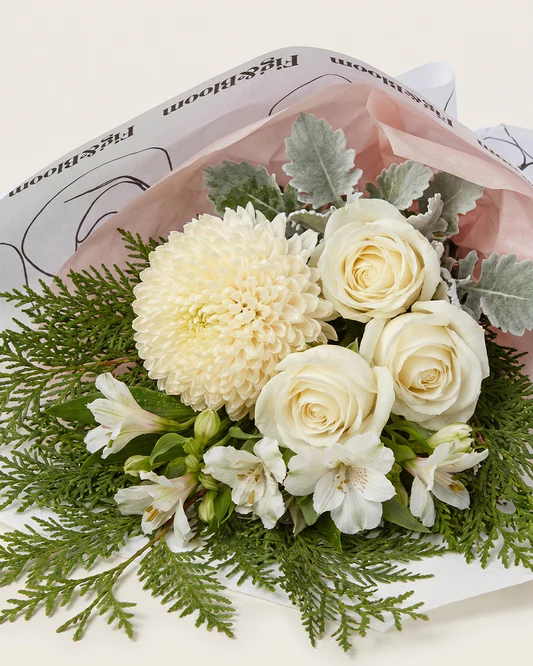
When someone is unsure, a simple bouquet or a basic arrangement is usually the safest choice. It doesn’t need to be huge. It just needs to look cared for.
Here are the common styles people will see when choosing funeral flowers:
- Bouquets wrapped for delivery, often sent to the home.
- Vase arrangements, easy for the family to place anywhere.
- Wreaths and sheafs, traditional and often used at services.
- Casket sprays, generally chosen by the closest family.
- Standing sprays, typically organised by family groups or workplaces.
If they’re not immediate family, they usually avoid ordering a casket spray unless they have been asked to. A vase arrangement or a simple wreath is more neutral and less likely to step on anyone’s toes.
How do they pick colours without overthinking it?
Colour choices tend to stress people out, mostly because they’re worried about doing the wrong thing. But there are some gentle guidelines.
White is classic. It reads as calm, respect, and simplicity. Soft pastels feel tender and traditional. Brighter colours can be right too, especially if the person who died was known for being cheerful, bold, or very much themselves.
When choosing funeral flowers, it helps if they ask one tiny question: would this colour feel like them?
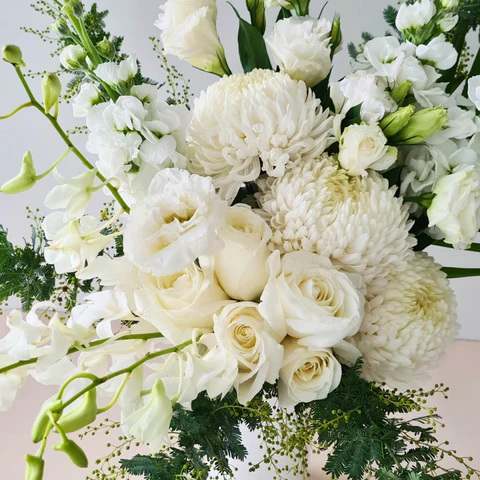
If they have no idea, they can go with white and green. It almost never feels inappropriate.
Do different flowers mean different things?
They can, but people don’t need to memorise a dictionary of meanings. Still, some flowers show up a lot for a reason.
Lilies are common at funerals and often symbolise peace, while roses can express love, respect, or deep appreciation depending on their colour. Chrysanthemums are widely used in Australian sympathy arrangements, and native flowers can add a personal, grounded touch to more informal services. Read more about funeral flower meanings and symbolism.
When choosing funeral flowers, seasonality matters as well. A florist will recommend what’s available and fresh, which is honestly what most people want. Fresh, tidy, respectful.
What should they write on the card?
This part trips people up more than the flowers. They want to say something meaningful and end up staring at a blank card.
Short is fine. Simple is fine. It doesn’t have to be poetic.
A few safe options:
- Thinking of you all during this time.
- With deepest sympathy.
- In loving memory.
- They will be missed.
- With love, always.
If the sender knew the person well, they can add one small personal line. A quick memory, a thank you, or a gentle reminder of what the person meant.
Choosing funeral flowers becomes much easier when the card message is clear. The flowers support the words, not the other way around.
What if they’re on a budget?
There is a quiet assumption that funeral flowers need to be expensive. They don’t. A smaller arrangement, well made, can be just as moving as a large one.
If they’re watching costs, they can:
- Choose a smaller vase arrangement with seasonal flowers.
- Ask the florist for a simple sympathy design within a set budget.
- Go in with others and send one tribute from a group.
When choosing funeral flowers on a budget, being upfront with the florist helps. Florists do this every day. They can work within limits without making it look cheap or sparse.
Should they choose something formal or more personal?
This usually depends on the relationship.
If it’s a colleague, neighbour, or more distant connection, a clean, classic arrangement is safest. Whites, greens, soft colours, not too quirky.
If it’s a close friend or family member, they might choose something that reflects the person’s personality. Favourite colours. Native flowers they loved. Something gentle and a bit less generic.
Choosing funeral flowers becomes more personal when they lean into who the person was. Not just what “looks right”.
What if they can’t attend the funeral?
If they can’t be there, sending flowers can stand in for presence. It’s a way to show the family they were thinking of them.
In that situation, they might send flowers to the family home on the morning of the funeral or the day before. Or they might send something a few days after, when the house is quiet and the support tends to drop off. Choosing the right Sydney wedding florist can also help ensure floral arrangements are selected with care, timing, and personal meaning in mind.
Choosing funeral flowers for after the service can feel especially thoughtful because it meets the family in the slower, heavier part of grief.
How do they avoid common mistakes?
Most mistakes are not dramatic. They’re just little missteps people make when they’re rushing or stressed.
A few things to watch:
- Check the notice for “no flowers” or cultural preferences.
- Confirm the correct delivery address and service time.
- Include a name on the card, clearly, so the family knows who sent it.
- If sending as a group, decide how the message should be signed.
- If unsure about size, ask the florist what’s appropriate for the venue.
Choosing funeral flowers isn’t a test. But a bit of care with details prevents extra hassle for the family on the day.
What’s the best next step if they still feel unsure?
If they’re stuck, they can do one very practical thing: call a local florist and explain the situation in plain language.
They can say who the flowers are for, where they’re going, and what budget they have. A good florist will guide them towards something suitable without upselling or making it complicated.
Choosing funeral flowers is often easier when someone else helps carry the decision for a minute. Especially when grief is already taking up so much space.
In the end, the point is simple. They’re showing respect. They’re showing up, even from a distance. And that matters more than getting every detail perfect. Choosing funeral flowers is just one small way to say, quietly, they were loved.